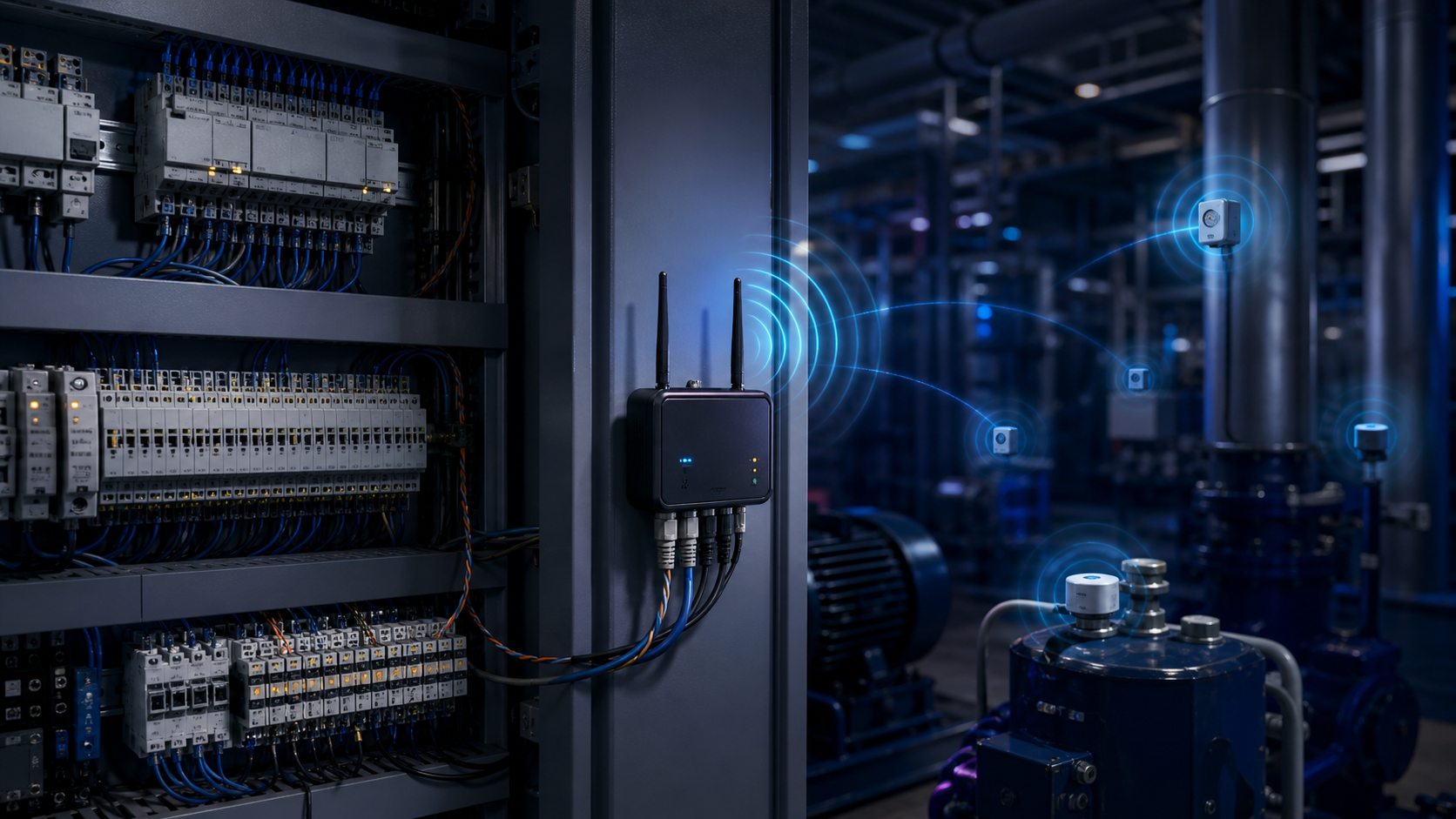
EnrgTech: The Wireless-to-Wired Bridge for Real-World IoT
Most sites don’t get to start from scratch. They already have meters, drives, PLCs, pumps, panels, and controllers using RS-485 (often Modbus RTU), and in many environments CAN bus is the backbone for vehicles and machines.
At the same time, new sensors and devices are increasingly wireless—because pulling cable is expensive, slow, and sometimes impossible.
EnrgTech is built for that reality: it brings ZigBee, LoRa/LoRaWAN, Wi-Fi, RS-485, and CAN into one gateway, so you can connect modern wireless sensors and long-range nodes to the wired equipment you already trust.
What it means (from a user’s perspective)
1) “ZigBee to RS-485 converter” — wireless mesh sensors, wired industrial equipment
ZigBee is commonly used for low-power sensor networks and is often deployed as a mesh, meaning devices can relay messages for each other. That helps extend coverage and improve reliability across rooms, floors, and industrial layouts.
So when you see “ZigBee → RS-485” on a gateway, what you should hear is:
- Install sensors where they’re needed (no new cabling)
- Collect data through a ZigBee mesh
- Expose that data to your RS-485 world (often Modbus RTU)
- Use your existing PLC/BMS/SCADA tools without redesigning the whole site
This is especially useful for retrofits: you keep your proven RS-485 equipment and add wireless sensing wherever wiring is difficult.
2) “LoRa to RS-485 converter” — long-range, low-power nodes feeding local wired systems
LoRa/LoRaWAN is designed for long-range communication with low power consumption, which makes it a strong fit for remote sensors: yards, farms, distributed facilities, tanks, outdoor assets, and wide industrial sites.
So when you market “LoRa → RS-485”, what users get is:
- Long-range sensing where Wi-Fi doesn’t reach
- Battery-friendly endpoints designed for low power use
- A local wired handoff into RS-485 systems that are already installed on-site
In practice, it means you can pull remote data into the same wired ecosystem your operations team already understands.
Why “Wireless ↔ RS-485” is a big deal
RS-485 remains popular because it is reliable in electrically noisy environments and widely supported across industrial equipment. When your gateway bridges wireless networks into RS-485, users typically win on three fronts:
- Cost: fewer cable runs, fewer electricians, fewer shutdowns
- Speed: add sensors and coverage in hours/days instead of weeks
- Compatibility: keep existing Modbus/RS-485 workflows and software
What does EnrgTech Provides?
- Wireless-to-Wired Industrial Bridge
Bring ZigBee/LoRa sensor data into RS-485 and CAN-based systems. - Multi-Protocol Edge Gateway
One box that speaks ZigBee + LoRa + Wi-Fi + RS-485 + CAN. - Retrofit Accelerator
Modern sensing without ripping out legacy infrastructure. - Site Unifier
Consolidate multiple networks into one point of control and integration.
Where it shines (real deployment examples)
Smart buildings
- ZigBee sensors (temperature, occupancy, IAQ, leaks) feeding into existing RS-485 controllers
- Wi-Fi for local dashboards and cloud connectivity
Industrial sites
- RS-485 (often Modbus RTU) for meters, drives, controllers
- ZigBee for additional monitoring points without new wiring
- LoRa for remote corners of a site (yards, tanks, outdoor equipment)
Fleet, vehicles, and machinery
- CAN bus for vehicle/machine telemetry
- Wi-Fi for depot sync and local access
- LoRa for long-range low-bandwidth monitoring where needed
Summary
If you’re modernizing a site without replacing what already works, a gateway that bridges ZigBee and LoRa to RS-485 is the practical path: you extend sensing wirelessly, keep the wired backbone where it matters, and unify everything through one edge device.
EnrgTech is designed to be that bridge—so you can deploy faster, integrate easier, and scale without re-cabling your world.
Want to see EnrgTech in your environment? Reach out and we’ll share a reference architecture and a quick deployment checklist based on your use case.